
Introduction:
This is the last chapter of a four-part blog on transition from driving for older adults. I wrote the original blog from December 2009 to January 2010, and I am updating each entry to explain how we worked as a family to help our parents make a smooth transition from the driver’s seat to the passenger seat. The update on what actually happened follows this earlier blog.
Key Take-aways:
- Life is a journey, but it is much faster when we are very young and very old, so try to be prepared for maybe rapid changes in a transition from driving when the time comes.
- If there is an ITN Affiliate or an ITNCountry near you, look into the CarTrade program, an opportunity to exchange the vehicle an older person can no longer drive for transportation credit in their Personal Transportation Account.
- Tell the older person in your life that you love them and that you are proud they made a safe transition to the passenger seat before anyone was hurt.
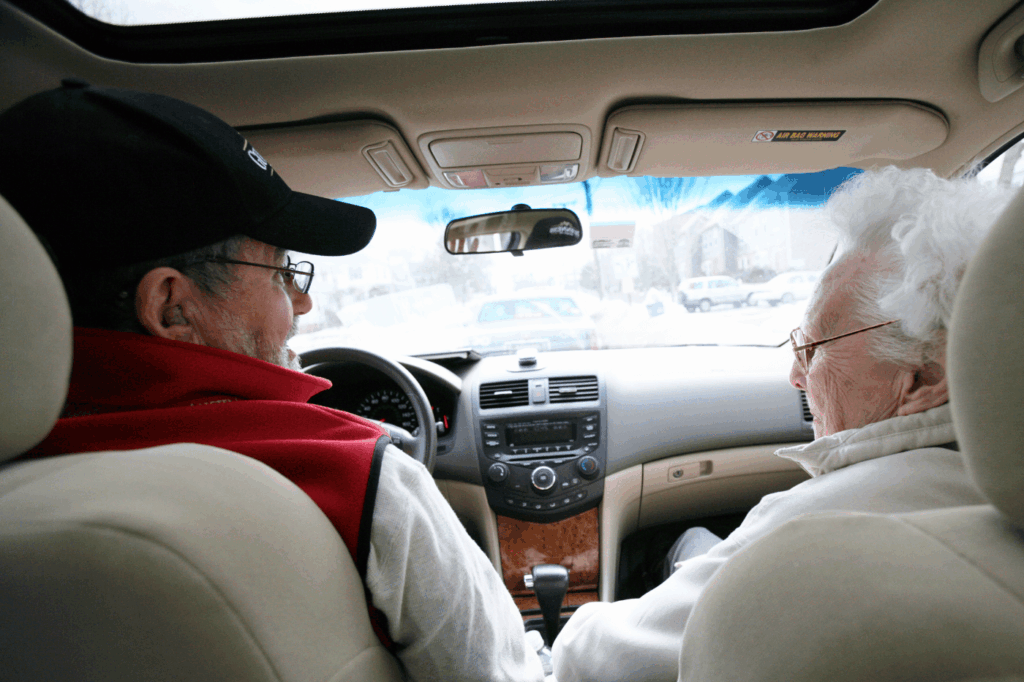
Chapter Four: My Mother Moves to the Driver’s Seat
My mother was never a big fan of driving. It was just something she learned to do so she could get around in the world. When she remarried, 28 years ago, my stepfather assumed most of the driving. He loved to drive and he loved his cars. Aside from the few times she was alone and drove to volunteer at the county hospital or go to a meeting, when they were together, he was the pilot and she was the navigator.
The less she drove, the less comfortable she was behind the wheel. When the inevitable health crisis happened and Dad could no longer drive safely, she moved to the driver’s seat. Even though their application for paratransit service was accepted, they would not schedule a ride. The taxi company was available, but they were reluctant to use it. For doctor’s appointments, they occasionally used the special “private driver” some of their friends recommended. If a friend offered a ride, they accepted, but it had to be life or death for them to ask a favor. After nearly 20 years of cheering me on as I worked to start ITN and ITNAmerica, they had no ITN to meet their needs. It reminded me of my many older friends who have helped us with our work in communities all over the United States, and are waiting so patiently to use the service themselves. Now it was happening to my parents.
My mother was doing the driving, and we all knew that was not a happy situation. She was OK as long as they only drove to places where she knew the way, like shopping, the library or the bank. But as my father’s health declined and the doctor’s visits increased to three or four times a week in distant locations, my mother’s driving anxiety escalated to the seriously uncomfortable zone. I suggested to her that when the winter weather arrived, she would need to use the alternative transportation plan we had prepared. It simply was not safe.
That was when the backup plan moved up to the first position as our parents’ free choice. We had every single thing in place for them to stay in their home, as they had requested, but when they thought about living in the suburbs, without ITN and without the ability to drive a car safely, they decided to move. They found an independent living place they love, put their house on the market and sold it in one month. My mother organized the entire move. I once told her that if she had been born at another time, she would have been the CEO of a large corporation.
“Sweetheart,” she said, “I am happy I have lived at this time. Look what I have seen in my lifetime. I would not change it for anything.”
Every time I try to teach my mother something, she teaches me something else. My stepfather still copy-edits so well, he finds errors in newspapers, magazines and published books. The skills and qualities that make us whole and human and wonderful have nothing to do with driving. We can all move beyond it, and we can all learn grace from the older people in our lives who do it so well.
Update:
When my Mother decided she did not want to drive anymore she announced to my Dad it was time to get rid of his car, too. I suppose as long as “his” car was in their garage or driveway, he still felt like a driver, even though he was not driving it anymore. He declined to give the car away. My mother responded by telling him she would not cook dinner for him anymore. I don’t think this was a great sacrifice for her, even though she was a great cook, because she once told me that when she died, she wanted to come back as a man so she can arrive home from work and say ”What’s for dinner?”
Finally, when retiring from cooking did not work, my Mother announced she would not sleep with my Father anymore. That did it.
My Father decided to give the car to me. He was so proud of it, he wanted it to be in perfect condition, so he had all of the body work done, mostly the dented-in sides where he hit the garage pulling the vehicle in for the night. I traded their car for a fuel efficient 2010 Prius, which I still drive today, 15 years later. Their car was worth $2,300 toward my new Prius, so I placed that exact sum in my parents’ Personal Transportation Account with ITNCentralCT, located not far from my folks new Connecticut home. At any ITN, riders can fund their trips with the equity from a vehicle they no longer drive. It worked perfectly, and my parents rode with ITN for many years. My Dad passed away soon after, while my mother rode for so many years, she had funds enough to donate them to the ITN Road Scholarship Program for older people who need help paying for their rides.
My Mother moved to Maine when she was 98, and by then she had dementia. She waited for streetcars that no one else could see and talked to people who were only there in her mind. But she loved visits, and chocolate candy, and strolls in the garden to look at the flowers. Both she and my Dad transitioned from driving as their own free choice (well, my Mother did use a little leverage) and they lived safely ever after.

